


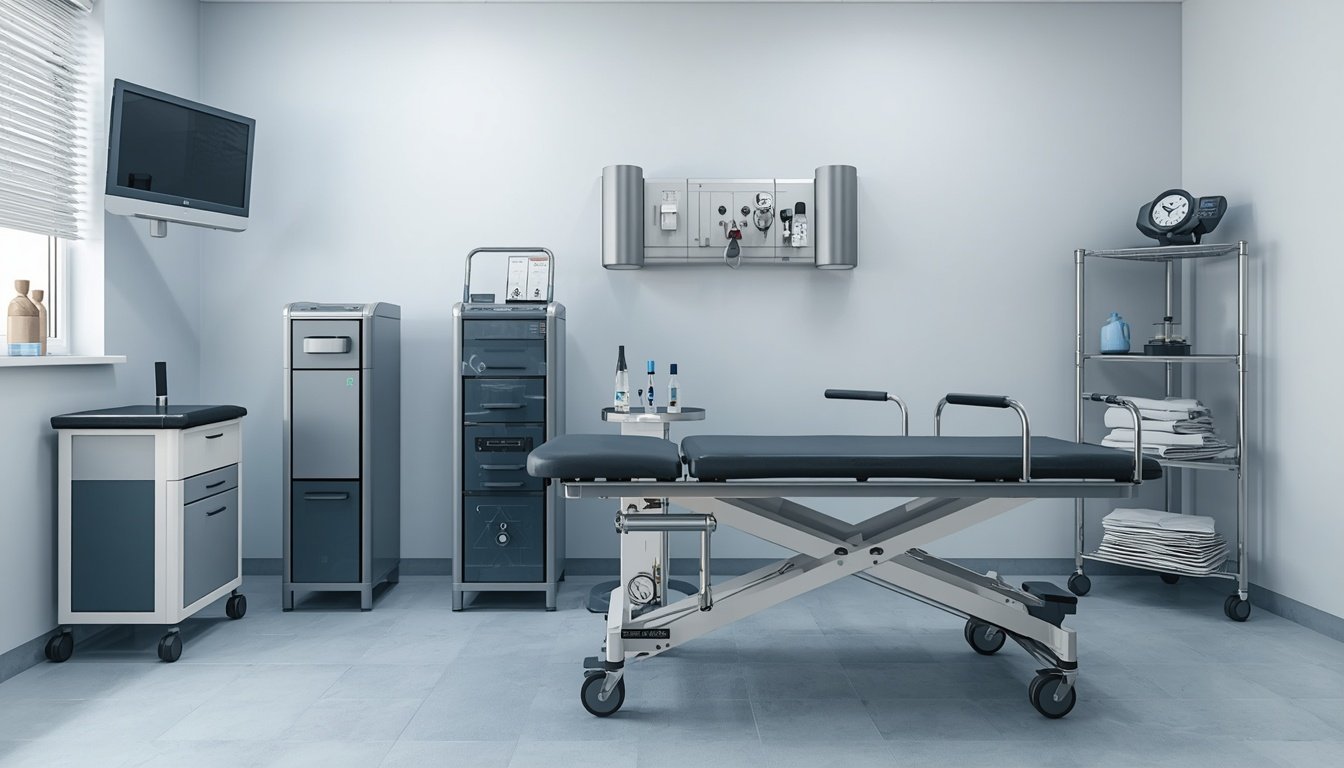
A high-performing clinic does not require every device marketed as physiotherapy rehabilitation equipment. The most effective clinical setups reflect specific patient demographics, core service lines, available square footage, and the objective outcome measures required by clinicians. A versatile, high-utility foundation serves patients far better than a crowded facility filled with expensive, single-purpose technology. Advanced physiotherapy rehabilitation equipment encompasses the tools, exercise systems, mobility aids, assessment instruments, and therapeutic devices used to evaluate movement and guide supervised care.
Effective equipment supports thorough assessment, progressive exercise, mobility practice, balance training, and a safe return to functional activities. Crucially, equipment should facilitate the treatment plan, never dictate it. Clinical reasoning remains the primary driver of recovery across orthopedic, neurological, pediatric, geriatric, and sports rehabilitation.
What are Physiotherapy Rehabilitation Equipment’s?
Advanced physiotherapy rehabilitation equipment includes specialized tools and devices that help patients recover from injuries, manage pain, restore mobility, and improve muscle strength and physical function.
Where is it used?
- Physiotherapy clinics: For pain management, mobility training, and injury rehabilitation.
- Hospitals: To support recovery after surgery, illness, or accidents.
- Rehabilitation centres: To help patients regain strength, balance, coordination, and independence.
- Sports facilities: To assist athletes recovering from sports-related injuries.
- Home care: To support prescribed rehabilitation exercises and ongoing recovery.
Common examples include treatment tables, TENS units, ultrasound therapy machines, resistance bands, exercise bikes, parallel bars, and balance trainers.
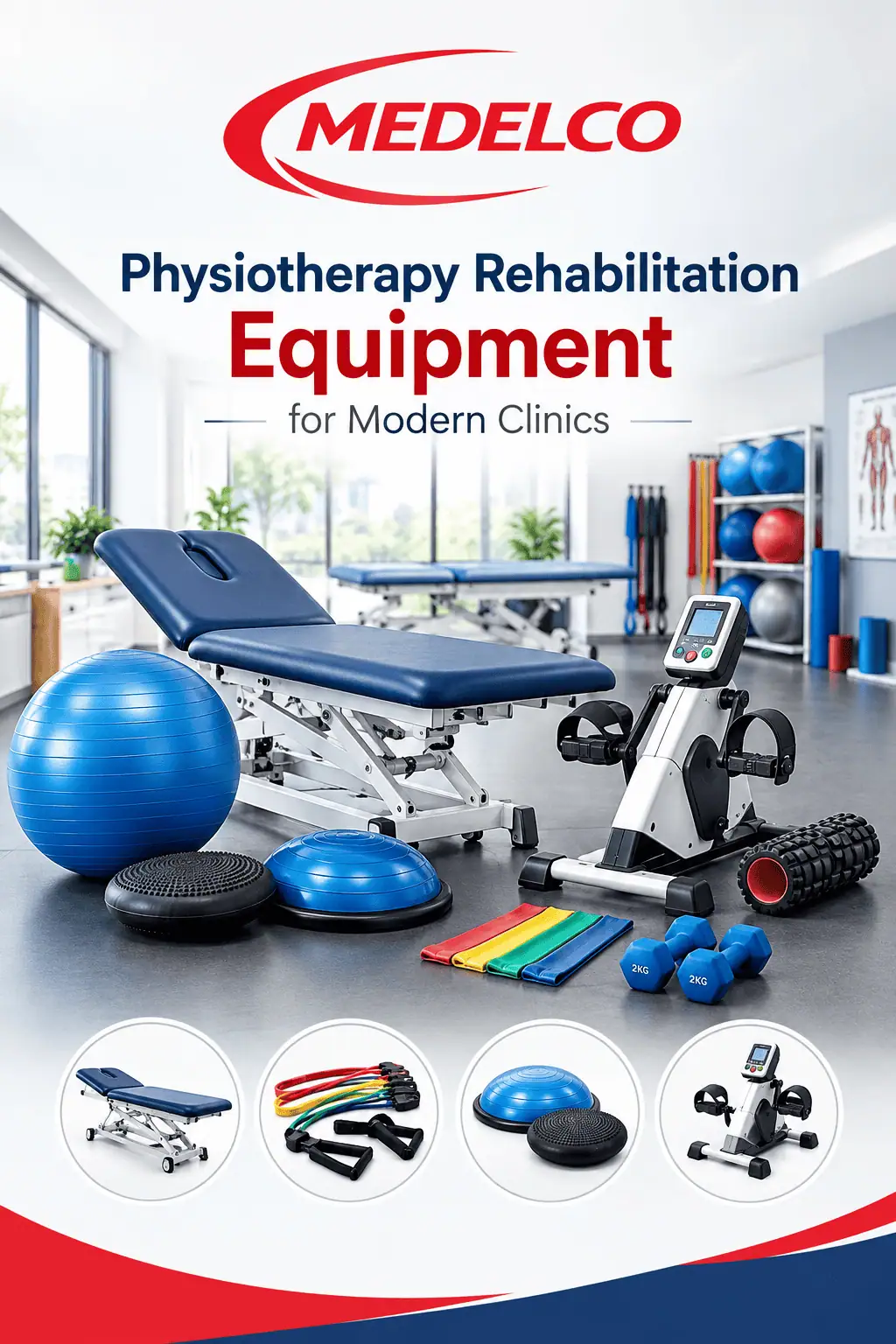
Considerations Before Purchasing Physiotherapy Rehabilitation Equipment
- Patient Population & Clinical Scope: Orthopedic and musculoskeletal practices rely heavily on adjustable treatment plinths, variable-resistance systems, and step equipment. Neurological services require specialized equipment such as parallel bars, transfer supports, and body-weight support tools. Sports, pediatric, pelvic health, and geriatric practices each demand tailored resources.
- Treatment Philosophy: Exercise-based care requires open floor space, accessible storage, and adaptable equipment that accommodates progressive loading. Hands-on manual therapy prioritizes adjustable plinths and positioning bolsters.
- Versatility & Operations: Prioritize adjustable tools that accommodate varying patient heights, abilities, and recovery stages. Evaluate durability, infection control requirements (non-porous, easily sanitized surfaces), routine maintenance, and staff operational competency before buying.
- Spatial Workflow: Measure doorways, active treatment zones, storage footprints, and patient travel paths prior to ordering. Ensure sufficient clearance for clinicians to guard, assist, and manipulate movements safely. In compact clinics, multi-purpose equipment delivers significantly higher return on investment than static, single-use machinery.
Core Clinical Equipment
- Adjustable Treatment Plinths: Plinths form the operational cornerstone of most clinics. Electric or hydraulic height adjustment protects clinician ergonomics and facilitates safe patient transfers during manual therapy, assessment, and post-operative care.
- Progressive Exercise & Functional Tools: Free weights, dumbbells, kettlebells, medicine balls, resistance bands, and cables enable precise control over movement resistance, vectors, and ranges of motion.
- Functional Step & Cable Systems: Step platforms facilitate lower-limb loading, stair negotiation, and gait mechanics. Pulley and cable machines provide smooth, continuous resistance across three-dimensional movement patterns that free weights cannot replicate.
| Equipment Category | Clinical Examples | Primary Rehabilitation Applications |
| Exercise Systems | Mats, resistance bands, free weights, steps | Strength, neuromuscular control, mobility, progressive loading |
| Mobility & Gait Aids | Parallel bars, body-weight supports, walkers, canes | Gait retraining, weight-bearing progression, transfer safety |
| Balance & Coordination | Foam pads, balance boards, BOSU trainers, agility ladders | Proprioception, reactive balance, fall prevention, agility |
| Objective Assessment | Goniometers, handheld dynamometers, vital sign monitors | Quantitative baseline testing and outcome tracking |
Mobility, Balance, Strength, and Endurance Equipment
Mobility and gait rehabilitation
Parallel bars give patients a controlled place to practise weight shifting, stepping, transfers, and early gait. Crutches, canes, walkers, and other walking aids let clinicians match support to the patient’s current ability. Stairs, step systems, ramps, and transfer equipment help connect a treatment exercise with the demands of moving around a home or community.
Adjustability and access are important here. Equipment should suit different body sizes, mobility levels, and methods of assistance. Clinicians also need space to stand beside a patient, guard movement, and respond quickly when balance changes.
Balance and coordination
Balance boards, foam pads, stability discs, BOSU-style trainers, agility ladders, cones, markers, and reaction tools can support orthopedic, neurological, sports, and older adult rehabilitation. They let clinicians change the base of support, visual demands, direction, speed, and cognitive challenge. Start with a stable, supervised task, then progress only when the patient can perform it safely.
Strength and functional rehabilitation
Cable machines, pulley systems, resistance machines, functional training frames, squat supports, and upper or lower limb strengthening equipment can support progressive loading and return-to-function programs.
They help when repeatable resistance or a stable setup is needed, but they aren’t automatically better than simpler tools. The right choice depends on treatment goals, room size, patient access, and staff competence.
Cardiovascular options may include a stationary bike, treadmill, cross-trainer, upper-body ergometer, or step machine. These machines can support conditioning, walking tolerance, warm-up, and graded endurance work. A clinic doesn’t need every type. Choose according to patient demand, supervision capacity, floor space, and the services provided.
Therapeutic Modalities & Objective Measurement
Therapeutic modalities, such as TENS, electrical neuromuscular stimulation (NMES), therapeutic ultrasound, thermotherapy/cryotherapy, laser, and shockwave therapy, serve strictly as clinical adjuncts. Modalities should be applied selectively to manage symptoms, facilitating active movement, exercise, and patient education rather than replacing them. Proper use requires strict contraindication screening, adherence to local scopes of practice, and staff credentialing.
Objective assessment tools transform clinical outcomes from subjective observations into quantifiable data. Handheld dynamometers (HHD) capture isometric force production, goniometers measure joint range of motion, and vital sign monitors track physiological responses to exercise.
Operational Layout & Safety Management
Design treatment areas around functional activity zones rather than arbitrary space filling:
- Mobility Zone: Position parallel bars and step platforms near open pathways for gait training.
- Strength & Conditioning Zone: Group cable machines, weights, and functional equipment together with ample clearance.
- Safety Protocols: Implement non-slip flooring, clear travel corridors, accessible emergency supplies, and structured sanitation schedules for all high-contact surfaces. Regularly inspect cables, carabiners, upholstery, and structural fasteners for wear.
Closing Thought
There is no single equipment list for every modern physiotherapy clinic. A sound foundation usually includes treatment tables, exercise and strengthening tools, mobility aids, balance equipment, assessment instruments, and safety resources. Cardiovascular equipment, electrotherapy, and specialist systems belong in the plan when they match the clinic’s patients, services, space, and professional expertise.
The strongest setup isn’t the one with the most devices. It’s the one that lets clinicians assess movement, progress exercise safely, practise meaningful function, and track change over time. Revisit equipment needs as the clinic grows, its services change, and its patient population develops.
Frequently Asked Questions
What equipment is essential for a physiotherapy clinic?
Most clinics benefit from adjustable treatment tables, mats, resistance tools, free weights, steps, mobility aids, balance equipment, basic assessment tools, storage, clinical supplies, and safety resources. The exact mix depends on the clinic’s patient groups and services.
What equipment is used for rehabilitation?
Rehabilitation may use exercise tools, gait and transfer equipment, balance devices, strengthening systems, cardiovascular machines, and selected therapeutic modalities. Equipment should support a documented assessment and treatment goal, rather than determine the care plan.0101
Do modern physiotherapy clinics need electrotherapy equipment?
Not every clinic needs the same modalities. TENS, electrical stimulation, ultrasound, heat, cold, laser, or shockwave devices may suit selected services, but they require appropriate training and should complement active rehabilitation.
How do I choose physiotherapy rehabilitation equipment for my clinic?
Review your patient population, clinical specialties, treatment approach, available space, access requirements, staff skills, cleaning process, maintenance needs, and expected frequency of use. Start with versatile equipment for common treatment goals, then add specialist devices when demand and clinical scope support the purchase.
