


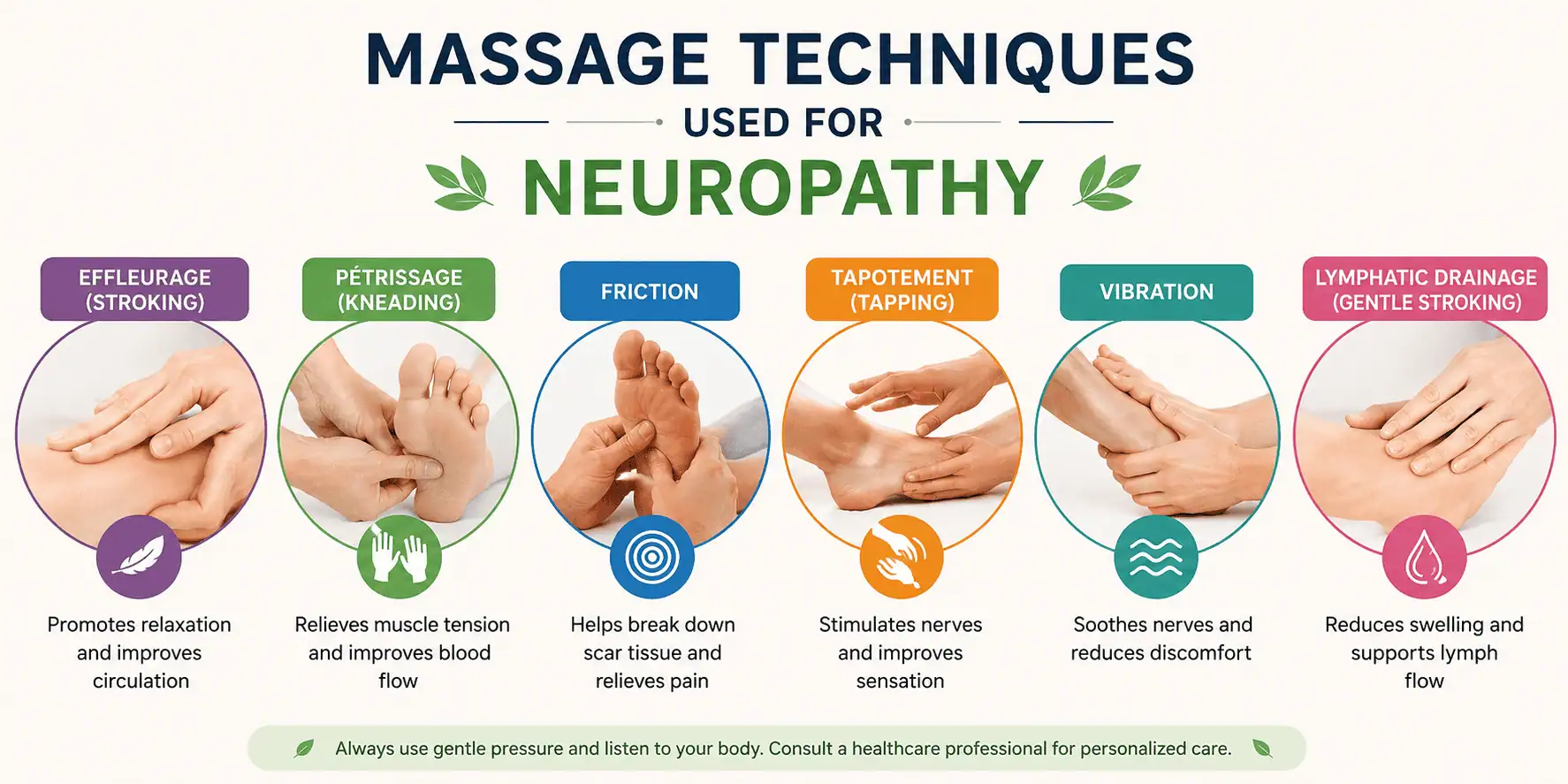
If you’re dealing with peripheral neuropathy, you’re likely searching for relief that’s practical and doable. The right massage approach can help improve circulation, ease nerve pain, and support your overall well-being. The key is to tailor techniques to your symptoms, tolerance, and goals, then build a steady, client-centered treatment protocol with your therapist. First, know that massage for neuropathy is not a cure. it is a supportive therapy that works best when combined with medical and self-care. Regular massage sessions help keep distal circulation moving, deliver more oxygen and nutrients to affected tissues, and reduce muscle tension that often accompanies nerve pain.
Below, you’ll find the kinds of massage that are commonly used for neuropathy and how they fit into a practical treatment protocol. We’ll also cover how to participate in your sessions and what to expect in terms of pace and progression.
Understanding Types of Massage for Neuropathy
Therapists often blend techniques to address the symptoms of neuropathy. Common approaches include deep tissue massage to release tight bands in the muscles, trigger point therapy to target specific tight spots, and myofascial release to improve tissue mobility. A general remedial massage can help reduce overall tension and improve circulation in the limbs most affected by neuropathy.
These techniques work together to boost circulation, which helps deliver tissue oxygen and nutrients to nerves and surrounding structures. Improved blood flow supports nerve rehabilitation and can lessen sensations like tingling, burning, or numbness over time. Your therapist will adjust pressure based on your tolerance, aiming for gradual progress rather than quick fixes.
If you notice more numbness after a long day, your therapist might start with gentler techniques around the ankles and wrists, then gradually introduce light pressure on the calves or forearms as tolerance builds. In another case, someone with burning feet might benefit from brief, soothing stretches followed by gentle kneading to relax the calf muscles and improve circulation.
Practical step: keep a quick symptom diary for each session. Note which areas feel stiffer, where you feel warmth or throbbing, and how pressure levels feel on a 1, 10 scale. Share this with your therapist before the next visit to tailor cues and intensity.
How massage improves circulation for neuropathy?
Many neuropathy symptoms stem from compromised distal circulation. Massage can increase blood flow, helping capillaries and small blood vessels deliver more oxygen and nutrients to the nerves and tissues. This improved circulation supports tissue healing and can ease pain and stiffness in the feet, hands, and lower legs.
Your therapist may focus on soft tissue work around the ankles, feet, hands, and calves to encourage better fluid movement and capillary perfusion. Regular sessions, paired with gentle self-care, can compound these benefits over weeks and months.
Data point: studies show that regular massage can modestly elevate local blood flow and reduce inflammatory markers in limb tissues, which may contribute to symptom relief over time.
Edge case: if you have significant edema, your therapist will coordinate with your medical team. You might start with gentle techniques that avoid exacerbating swelling and gradually introduce rhythm and light pressure as fluids normalize.
Your participation and tolerance matter
Therapy works best when you’re an active partner. Communicate clearly about pain levels, and don’t push into painful pressure. A common approach is to start with lighter depth and gradually increase as your comfort grows. Expect that neuropathy symptoms can require months of consistent work before you notice meaningful changes.
Keep a log of how you respond after each session and in the days that follow. This helps your therapist adjust the treatment protocol to you and track progress over time.
Tip: bring a short list of goals to each appointment, such as reducing pain in the mornings or improving grip strength. Small, measurable goals keep you motivated and help your therapist fine tune the plan.
Session frequency and length
Most programs use 60-minute sessions once a week as a baseline. Regular, detailed therapy gives your nervous system time to adapt and your circulation time to improve. Occasional, lengthy gaps between visits tend to yield slower progress. If your symptoms are more pronounced, your therapist might extend the plan or increase frequency briefly, then taper as improvement stabilizes.
Consistency matters. The aim is steady momentum rather than sporadic relief. Pairing in-clinic sessions with daily self-care can accelerate results.
How to schedule for real life: if you commute or work long hours, block a consistently same day each week and plan a 10-minute self-massage routine beforehand to prime your tissues.
Self-care for neuropathy between sessions
Daily self-massage of hands and feet can sustain the benefits of professional care. Gentle skin stroking, ankle circles, and light foot or hand massage are good starting points. Some people find using tools like tennis or golf balls helpful to stimulate circulation and maintain tissue health. Your therapist can show you safe techniques that respect your nerves and skin condition.
Self-care also includes hydration, balanced nutrition, and simple range-of-motion exercises for the ankles and fingers. These practices support the musculoskeletal system and help your body respond better to massage therapy.
Try 5 minutes of light self-massage after you shower when your skin is warm and receptive. Pair this with a short ankle circle series and some finger stretches to keep joints supple.
Working with your massage therapist
To get the most from each visit, come prepared with notes about what’s working and what isn’t. Mention specific patterns of numbness or burning, and where you feel changes in sensation. Your therapist participation is essential to developing a personalized treatment protocol that targets your unique neuropathy profile.
Some clients find it helpful to involve their oncologists or primary care providers in their care plan, especially if chemotherapy-induced neuropathy or other systemic factors are at play. Collaboration can ensure the massage protocol complements medical treatment and remains safe alongside any ongoing therapies.
What to expect in a neuropathy-focused massage plan
A good plan covers several bases: a comprehensive assessment, a tailored massage protocol, careful monitoring of tolerance, ongoing adjustments, and clear self-care guidance. The therapist will explain each technique, why it’s chosen, and how it supports nerve health and distal circulation. You’ll move at a steady pace that respects your symptoms while aiming for meaningful improvement over time.
In practice, you’ll see a mix of techniques like deep tissue massage, trigger point therapy, and myofascial release delivered in a way that minimizes discomfort but maximizes benefit. The emphasis stays on circulation, tissue healing, and nerve rehabilitation rather than short-lived relief.
Overview of neuropathy and massage rationale
Peripheral neuropathy can bring tingling, numbness, and sharp nerve pain to your hands, feet, and legs. It can stem from several causes, including diabetes and certain chemotherapy drugs. Massage isn’t a cure, but it can help ease symptoms by boosting circulation, easing muscle tension, and calming nerve signaling. When done right, a massage plan supports smoother blood flow and gentler nerve communication.
For many people, the right approach feels supportive rather than painful. You want techniques that respect sensitivity while offering relief. That’s where a thoughtful, client‑centered protocol shines. Your participation matters, and so does your therapist’s ability to tailor every session to how your body responds.
What readers can expect from this guide
In this guide, you’ll find practical, plain spoken guidance on choosing massage styles for neuropathy. It covers:
- Different approaches that support nerve health without overstimulation
- What a typical session might look like, including safety steps
- Ways to combine in clinic care with at‑home practices for better results
Think of this as a friendly, practical roadmap to a personalized treatment plan. You’ll learn how to talk with your therapist, what questions to ask, and how to monitor progress week by week.
Expert Insight: “Massage therapy eases neuropathic pain by encouraging blood vessels near peripheral nerves to widen, boosting the delivery of oxygen and nutrients to damaged nerve endings.” , Industry Analyst
1. Remedial Massage: Deep Tissue and Myofascial Release for Nerve Health
Remedial massage centers on precise work that supports your musculoskeletal system. For neuropathy, the goal is to improve circulation and ease nerve irritation, not push through pain. You’ll feel gentler strokes around sensitive spots, with deeper work only where you can tolerate it.
How deep tissue and myofascial techniques support circulation
Deep tissue massage targets deeper muscle layers to release adhesions that can pinch nerves. Myofascial release works on the connective tissue around muscles, helping blood vessels carry nutrients and oxygen more freely. Together, these techniques can boost tissue oxygen delivery and help clear metabolic waste that may irritate nerves.
- Improved distal circulation to the feet and hands
- Reduced muscle tension around the limbs
- Enhanced tissue flexibility to support movement without flare-ups
What to expect in a session and safety considerations
A typical session starts with a quick symptom check and tolerance read. Your therapist will pace the work, often starting with lighter pressure and gradually increasing. Safety comes first, so speak up if anything hurts or feels too intense.
- Session lengths commonly range from 30 to 60 minutes, depending on need
- Therapist guidance vs. client feedback shapes the plan for leg, arm, or trunk work
- Avoid aggressive techniques on areas with numbness, tingling, or recent flare-ups
2. Neuromuscular Therapy for Neuropathy
Targeting nerve compression and trigger points. You may notice tingling or sharp sensations along the path nerves travel. Neuromuscular therapy zeroes in on spots where nerves can get pinched or irritated, with the aim to relieve compression without pushing through pain. Expect careful, collaborative pacing as your therapist works along key nerve pathways to calm signaling and reduce nearby muscle overactivity.
This approach blends light to moderate pressure with precise finger techniques. The goal is to release trigger points that contribute to referred pain or radiating sensations, helping improve distal circulation and ease overall discomfort.
Typical session structure and expected outcomes
A typical session flows with quick symptom checks, targeted work on specific muscles, then a gentle cool-down. Your therapist will adjust pressure and pacing in concert with you to stay within your comfort zone.
- Session length commonly ranges from 30 to 50 minutes
- Both therapist participation and client participation are essential for tailoring the treatment
- Outcomes often include reduced nerve irritability, improved range of motion, and steadier comfort between visits
Practical tips for getting the most from your session
Keep a brief symptom diary: note where you feel tingling, what movements trigger it, and any relief after sessions. This helps the therapist target the right nerve pathways and refine pressure over time.
Ask about home care: simple stretches or self-massage along the nerve path can reinforce gains between visits. Start with 2, 3 minutes daily and adjust as you feel improvement.
Be mindful of common pitfalls: pushing through pain can irritate nerves further. If a technique feels sharp or unbearable, speak up so your therapist can modify intensity or switch to a gentler approach.
Expert Insight: “Neuropathy massage can alleviate nerve irritability, improve circulation, and support sleep and mood, making it a practical complement to conventional cancer care.” , Industry Analyst
3. Connective Tissue Massage in Peripheral Neuropathy Care
Role of fascia in neuropathic symptoms
Fascia is the wrap around muscles, nerves, and vessels. When it tightens or sticks, it can press on nerves and amplify sensitivity. A connective tissue approach aims to release those restrictions so nerves glide more freely. You may notice calmer sensations as the tissue around irritated areas loosens.
Techniques and pacing to minimize discomfort
Therapists use gentle, sustained holds and light to moderate pressure to encourage fascial release without triggering pain. The pace is slow, with frequent check-ins to keep comfort within your tolerance. This method respects sensitivity while guiding tissues toward more flexible movement.
- Slow, deliberate strokes along limb pathways
- Attention to areas where numbness or tingling is felt
- Frequent pauses to assess response and adjust pressure
4. Therapeutic Massage Protocols for Diabetic Peripheral Neuropathy
Diabetic peripheral neuropathy calls for a careful, collaborative approach. You’re not just a recipient of therapy, you’re an active participant in shaping the treatment plan. That means clear communication about sensations, pacing, and comfort levels every step of the way.
Importance of client participation and safety
Your input guides how the protocol unfolds. Speak up about pain, burning, or numbness, and you’ll help tailor pressure, strokes, and positioning. Therapists will prioritize safety cues and avoid procedures that could irritate sensitive areas or risk skin breakdown.
Regular self-checks of the feet between sessions help catch changes early. For example, note areas that feel warmer, cooler, or unusually sensitive after a treatment, and share those details at your next visit.
- Therapist and client collaborate to set realistic goals
- Pressure is customized to tolerance, with gradual progression
- Skin integrity and sensation are monitored throughout the course
- Weekly session patterns and home-care guidance
A typical week blends professional sessions with at-home routines that support progress. Expect a structured pattern that reinforces improvements without overloading nerves. In practice, this might mean one in-clinic visit plus two short home sessions, spaced to avoid peak fatigue.
- During session
- At home
- Targeted massage on areas with tingling or numbness
- Daily gentle foot massages and ankle mobility moves
- Check-in on comfort and tolerance
- Skin checks, moisture care, and guard against dry skin101
Expert Insight: “Foot massage therapy has a significant effect in reducing the complaints of diabetic peripheral neuropathy (DPN) and should be incorporated as a safe, supportive home-care option with attention to patient tolerance and gradual progression.” , Industry Expert
5. Self-Care Practices to Complement Massage
Daily foot and ankle routines
You can extend the benefits of massage by weaving simple routines into your day. Small, steady habits support circulation and soothe nerves between sessions.
- Feet flat, roll each arch with a tennis ball for 1, 2 minutes
- Gently point and flex the toes to encourage range of motion
- Wiggle the toes and circle the ankles in both directions
Consistency matters more than intensity. A little movement morning and night helps keep distal circulation steady and reduces stiffness.
Self-massage and range-of-motion exercises at home
Self-massage lets you stay in tune with how your nerves respond to pressure. Pair it with gentle ROM work to keep nerves gliding smoothly through tissues. This is a practical way to support your massage protocol between professional sessions.
- Use lotion or oil and apply light strokes along the sole and top of the foot
- Employ circular motions around the heel and along the toes, avoiding raw or irritated skin
- Incorporate ankle circles and gentle calf stretches after massaging
Try this 5-minute routine before bed: 60 seconds of plantar presses, 60 seconds of toe spreads, 60 seconds of ankle circles, and 60 seconds of calf stretches. If you notice numbness or tingling that lasts beyond 15 minutes, pause and consult your clinician.
6. Self-Guided Demonstrations and Resources
You don’t have to wait for your next appointment to start helping your nerves. With a few guided moves, you can reinforce progress between sessions. Here are practical foundations you can start today.
Foot-focused self-massage foundations
Gentle self-massage on the feet can support circulation and ease tenderness. Use a light touch and a soothing lotion or oil to reduce friction. You want comfortable pressure, not pain.
- Begin at the ball of the foot and slowly glide toward the toes, pausing where you feel a knot or tension.
- Use small circles along the arch to encourage glide of nerves through tissues, about 15, 30 seconds per area.
- Finish with a light, long stroke from heel to toes to calm the entire plantar surface, then repeat on the other foot.
- Consistency beats intensity. Short daily sessions help keep nerves responsive without overwhelming sensitive areas. For example, 5 minutes in the morning and 5 minutes before bed can create steady gains.
Ankle mobility drills and safe execution tips
Healthy ankle movement supports distal circulation and can lessen stiffness. Move within your tolerance, pausing if you feel numbness or burning. If you have a history of ankle injuries, adapt by limiting range and using support.
- Point and flex the foot slowly to create full range of motion, aiming for 10, 15 reps per set.
- Perform gentle ankle circles in both directions, keeping the movements smooth and controlled, about 20, 30 seconds per direction.
- Incorporate ankle pumps while seated to promote blood flow without standing strain, doing 2, 3 sets of 20 pumps.
Always monitor skin integrity. If you notice redness, blistering, or increased numbness, ease off and revisit your technique with your therapist. If symptoms persist beyond a few sessions, consider a supervised adjustment or alternative approach.
