


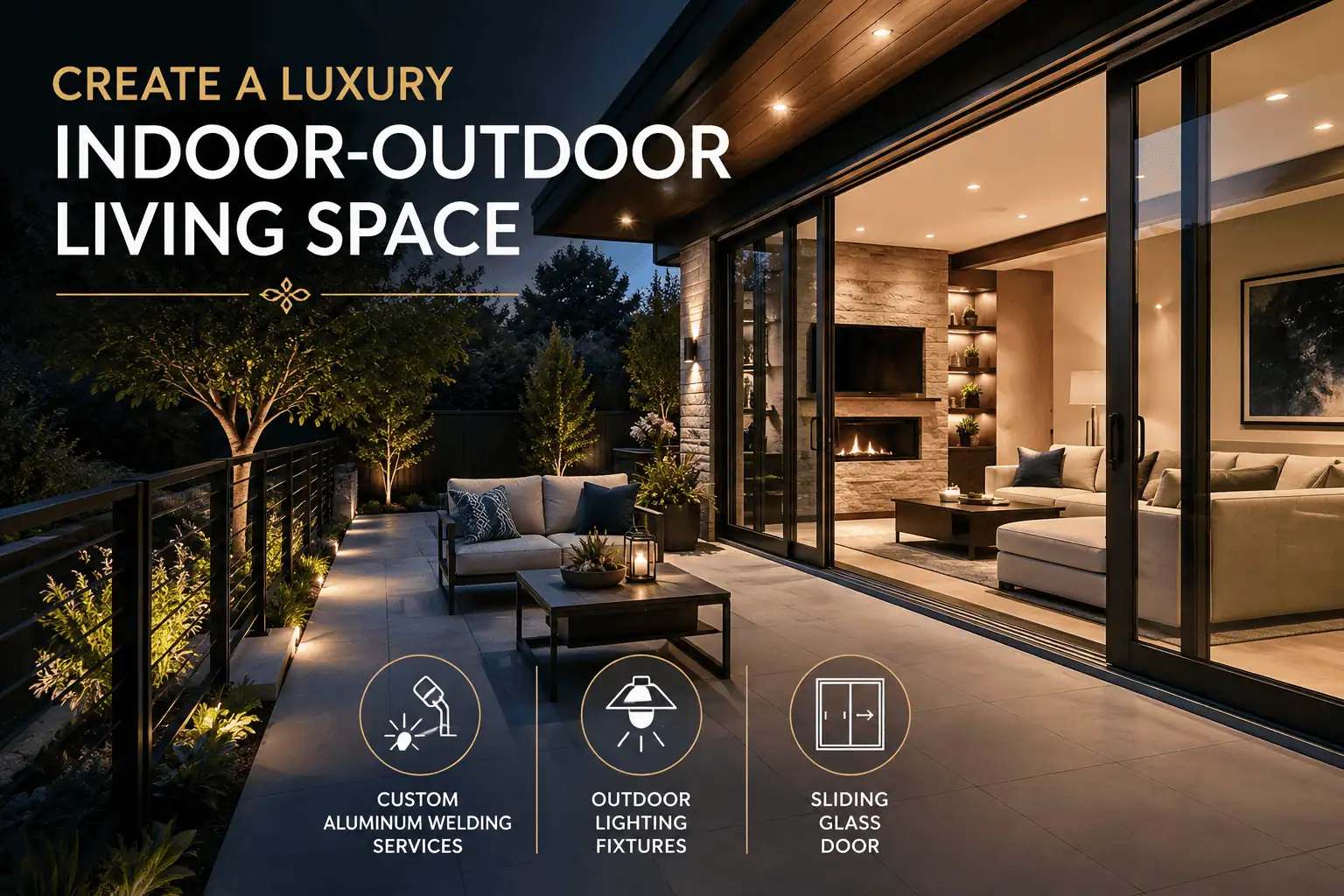
Two summers ago, a homeowner in Stoney Creek showed me their backyard. Nice space. Big enough. And completely wasted — a faded Canadian Tire umbrella, a rusted propane tank, four mismatched chairs that came from three different sets. They’d spent probably $2,800 on that space over four years. It looked like nobody lived there.
That’s the situation more Ontario homeowners are in than they’d like to admit. Not broke. Not uninterested. Just buying random pieces without a plan, and ending up with a yard that you walk past rather than walk into.
The Expensive Mistake Most People Keep Making
Here’s what usually happens. Spring hits, you order a patio set because it’s on sale. July comes and you add a string of lights. Then a fire pit. Then maybe a rug. By August you’ve spent $3,500 and your backyard still doesn’t feel like anything — it feels like a place things got put.
Compare that to a neighbour’s place. Same neighbourhood, similar lot. But they installed a proper covered structure, ran wiring once with a licensed electrician, and used continuous flooring from their kitchen to the patio. Their house listed last fall and sold $67,000 over asking in 11 days. The agent told them flat out — the outdoor room closed the deal.
That gap — between a yard with stuff in it and a space that actually functions as a room — isn’t really about money. It’s about sequence. You have to build it the right way or you’re just layering purchases on top of a bad foundation.
Start With the Connection, Not the Furniture
Most people start shopping before they’ve figured out the single most important question: how does the inside connect to the outside?
If you’re working with a standard hinged patio door from 2009, that’s your first problem. A wide-panel sliding glass door — especially one that opens to near full width — changes how your entire main floor feels. Light comes in differently. The kitchen or living room reads bigger even with the door closed. And when it’s open in July, the two spaces actually feel like one.
In Ontario you want thermally broken frames and at minimum double-pane glass — triple if you’re near the escarpment or anywhere that gets real wind. Don’t cheap out here. A $1,900 sliding door that leaks heat all winter will cost you more in heating bills over five years than the $2,000 you saved upfront. Good systems run $3,500–$8,000 installed, and they last decades. Get this right before you buy a single chair.
Aksi read: IRA Rebates Still Available in 2026: What Every U.S. Homeowner Needs to Know
Structure First. Everything Else Follows.
I’ve watched homeowners skip this step and spend four years rearranging furniture trying to make an unstructured space feel right. It never works. You need something overhead and something underfoot — and both need to be chosen before the fun stuff.
The Case for Aluminum Over Wood
A pergola or covered structure does one thing most people don’t expect: it makes your brain read the space as a room. The open sky feels like a yard. A defined ceiling, even an open-slat one, feels like a place you can settle into.
Wood pergolas look beautiful on the day they’re finished. Ask anyone who has one what they think three Ontario winters later. Cracking, graying, warping, and an annual maintenance bill they didn’t budget for.
When a structure is fabricated using proper aluminum welding services, you’re getting something that handles the freeze-thaw cycle without complaining. No rot. No annual sealing. The frame you put up in 2026 looks the same in 2036.
It costs a bit more upfront. It costs a lot less over time.
Flooring Is the Move Nobody Talks About
Run the same tile — or a very close match — from your interior out through the covered zone. Large-format porcelain works well for this, and it’s become significantly more affordable in the last few years. When the floor material is continuous, the eye doesn’t register where “inside” ends. That’s the feeling you’re after.
Composite decking in a wood tone works too if tile isn’t your preference. Just pick one and commit. The patchwork of concrete patio, random deck tiles, and indoor flooring is what makes most spaces look unfinished.
Lighting Will Make or Break Your 7 PM
You can have a beautiful structure, great furniture, real stone underfoot, and your outdoor space still feels like a parking lot after dark if the lighting is wrong. This is the thing people underspend on most, and it’s the thing that determines whether your space gets used in May and September or just in the peak of summer.
Layering matters. You want ambient light for general warmth, task light over a dining table or BBQ area, and accent light to create depth, along pathways, in planters, washing a feature wall. Choosing the right outdoor lighting fixtures rated for Canadian weather isn’t just a safety issue. Fixtures that can’t handle humidity and temperature swings yellow, fog, or fail within two seasons.
Warm LED colour temperatures, somewhere around 2700K, are what makes outdoor lighting feel like an extension of your interior instead of a parking structure. The difference between 3000K and 5000K outdoors at night is the difference between cozy and clinical.
Expect to spend $1,500–$4,500 for a properly installed layered system. That range moves depending on how many zones you’re lighting and whether you’re adding smart controls. Worth every cent. This is the line item most homeowners wish they’d budgeted more generously.
Ontario’s Climate Isn’t a Reason to Build Less — It’s a Reason to Build Smarter
Five months of comfortable outdoor living without any intervention is about right for most of Ontario. But five months is not the ceiling, it’s what you get if you do nothing.
Infrared ceiling heaters mounted under your pergola roof push that season out on both ends. They heat people and surfaces directly, so a bit of October wind doesn’t wipe out the warmth the way it would with forced air.
Pair that with a gas fire table, the ones with electronic ignition and remote controls are widely available now in the $1,200–$3,500 range, and a November evening outside becomes genuinely comfortable rather than a test of endurance.
Motorized louvre systems on pergola roofs are another option worth considering, especially if afternoon sun is a problem in your yard. You dial in how much light and shade you want, and unexpected August downpours don’t cancel your plans. The technology has gotten cheaper and more reliable, it’s not the $25,000 custom install it was five years ago.
On Furniture: Stop Buying Things That Won’t Survive
Teak holds up. Powder-coated aluminum holds up. HDPE resin holds up. That’s basically the shortlist for materials that survive real Canadian outdoor conditions without requiring special treatment or annual storage.
The $650 sectional and the $2,400 sectional can look almost identical in a showroom photo. After two Ontario winters, one of them looks like something you’d leave at the curb on garbage day. The other one looks the same as when you bought it. Buy the right thing once instead of the wrong thing twice.
If part of your space is covered, you have a bit more flexibility, UV exposure and rain are the main things that degrade outdoor fabric, so covered zones age slower. But for anything exposed, don’t compromise on material quality.
Why This Specific Window in 2026 Matters
The Ontario resale market has spent the last eighteen months recalibrating. What’s emerged on the other side of that correction is a buyer pool that is more selective and more specific about what they want. Finished outdoor rooms now show up explicitly in what agents describe as deal-closing features, right alongside renovated kitchens.
Beyond resale value, contractor availability has genuinely improved. The backlog that made it impossible to book a decent landscaper or fabricator in 2022 has cleared. Material costs for aluminum, composite decking, and porcelain tile have stabilized. If you’ve been putting this project off waiting for costs to settle, they’ve settled.
Permitting has also gotten cleaner in most Ontario municipalities for pergolas and covered structures under certain dimensions. Not painless, but predictable, which is what you actually need when you’re planning a project.
Phase It If You Need To – But Have the Full Picture First
Nobody says you have to do all of this in one season. Most homeowners who get great results do it in two or three phases. But the ones who end up having to redo things, or waste money on decisions that don’t connect to each other, are the ones who phased without a plan.
Structure and connection point in phase one. Lighting and climate in phase two. Furnishings last, because they’re the easiest thing to change.
If you flip that order and buy the furniture first, you’ll spend the next two years working around it.
What’s the Actual First Step?
It’s not buying anything. It’s getting eyes on your space from someone who’s done this before and can tell you what’s realistic for your lot, your budget, and your goals before you spend a dollar. A free estimate doesn’t commit you to anything. It just tells you whether the project you have in your head is the right project — or whether there’s a smarter version of it you haven’t considered yet.
