


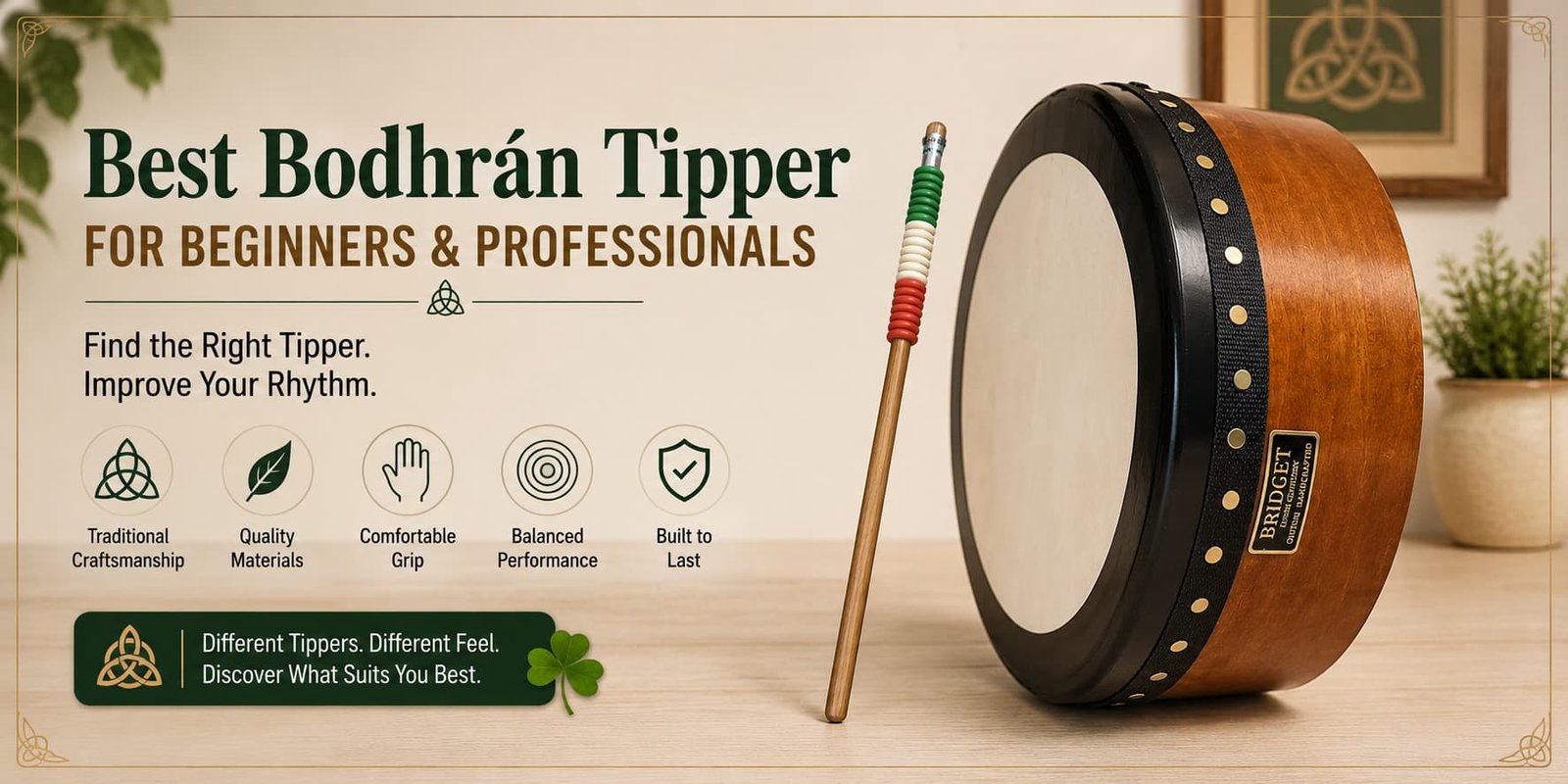
Choosing the best bodhran tipper is not simply a matter of picking the most expensive or visually impressive option. A tipper can change how the drum responds to your playing, how easily you control your rhythm, and the character of the sound you produce. For beginners, a balanced and versatile Bodhran tipper is usually the best place to start. More experienced players often become selective about weight, shape, balance, material and construction as their technique develops.
The important point is that there is no single bodhrán tipper that suits every player. Your ideal choice depends on how you play, the type of music you perform, the drum you use and the feel you want in your hand.
What Is a Bodhran Tipper?
A bodhran tipper, also called a beater or cipín, is the stick used to strike the head of the bodhrán. Unlike a conventional drumstick, a traditional double-ended bodhran drum tipper is commonly held around its centre and moved with a controlled wrist rotation, allowing the player to alternate the two striking ends.
That simple design gives the bodhrán much of its characteristic rhythmic flexibility. Players can vary impact, dynamics and articulation by changing the tipper, grip, striking position and pressure applied to the drumhead.
The tipper is therefore more than an accessory. It is one part of the interaction between the player’s technique, the drumhead and the instrument’s tuning.
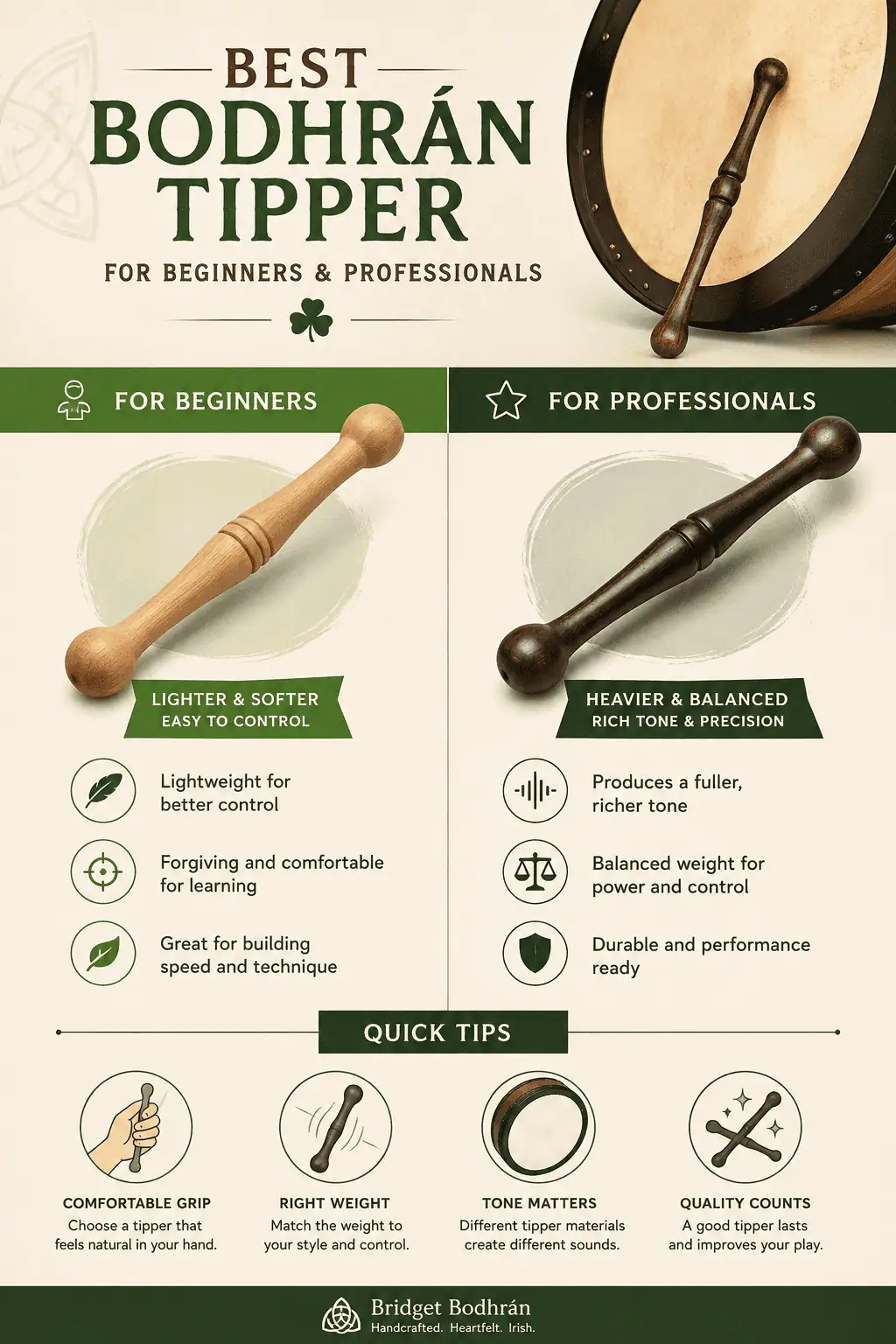
Why Does the Right Bodhran Tipper Matter?
A tipper has a relatively small physical footprint, but its weight distribution, shape and construction can noticeably affect how the instrument feels.
Rhythm and Control
A balanced tipper can make repeated strokes feel more predictable and controlled. This becomes particularly important when developing consistent wrist movement and faster patterns.
However, a heavier or lighter tipper is not automatically better. If the tipper requires excessive effort to control, it can interfere with relaxed technique. Conversely, a very light design may not provide the response or attack a particular player wants.
Comfort During Playing
The way a tipper sits between your fingers matters during longer practice sessions and performances. A comfortable grip, appropriate diameter and sensible balance can help you maintain relaxed movement.
Beginners should pay particular attention to whether they are gripping the tipper too tightly. Excess tension can make faster playing more difficult regardless of how good the tipper itself is.
Tone and Attack
The tipper influences the character of the initial attack against the drumhead. A solid, relatively heavy tipper can produce a more pronounced attack, while lighter or rod-style designs can create a softer or more diffuse response.
The final sound still depends on several other factors, including the drumhead, tuning, striking position, playing technique and how the non-striking hand controls the head.
That is why it is better to think of a tipper as part of the entire playing system rather than an isolated source of tone.
Types of Bodhran Tippers
Bodhrán tippers come in many shapes and constructions. The categories below provide a useful starting point, but there is considerable variation within each type.
| Tipper Type | Typical Characteristics | Potential Advantages | Often Suited To |
|---|---|---|---|
| Double-ended solid tipper | Two playable ends, usually held near the centre | Efficient alternating movement and versatile response | Traditional playing and general use |
| Single-ended tipper | One primary striking end with a dedicated grip area | Can provide a more deliberate, controlled feel | Players who prefer top-end or controlled techniques |
| Lightweight/slim tipper | Reduced mass and slimmer profile | Quick movement and agility | Players developing faster or more detailed techniques |
| Heavier tipper | Greater mass and/or thicker striking ends | Stronger attack and rhythmic presence | Players who prefer a fuller response |
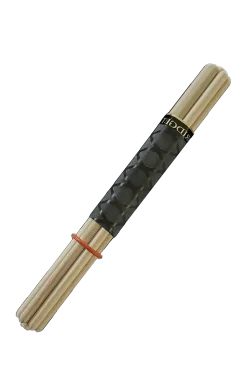
| Rod/hot-rod style | Multiple thin rods or dowels combined together | Softer, textured response | Quieter playing, experimentation and certain performance settings |
| Brush-style tipper | Brush-like striking construction | Diffuse attack and softer texture | Subtle dynamics and specialist applications |
These categories overlap. For example, a double-ended tipper can also be lightweight, while a handmade tipper may combine characteristics from several designs.
Double-Ended Bodhrán Tippers
The double-ended tipper is one of the most recognizable traditional designs. Both ends can strike the drum, and the player typically uses a pivoting wrist movement to alternate between them.
The advantage is efficiency. Once the movement becomes familiar, the player can create a continuous rhythmic motion without lifting the tipper for every individual stroke.
Double-ended tippers can work particularly well for players interested in traditional Irish rhythmic patterns, but they still require practice. A beginner should not assume that a double-ended design will automatically make fast playing easier. Good technique comes from controlled movement, relaxed grip and consistent timing.
Single-Ended Bodhrán Tippers
Single-ended designs use one primary striking end, with the opposite end serving as the handle or grip area.
They can provide a different sense of control and may suit players who use a top-end or more deliberate playing approach. The choice is ultimately personal rather than a strict beginner-versus-professional distinction.
Some players begin with a single-ended design because they prefer its handling, while others start with a traditional double-ended tipper and develop their technique from there.
Rod and Hot-Rod Tippers
Rod or hot-rod-style tippers use multiple thin rods or dowels rather than one solid piece of wood.
Their construction can produce a lighter, more textured rebound than a solid tipper. They are useful when a player wants to experiment with dynamics and tone rather than relying on the stronger impact of a conventional solid tipper.
They are not necessarily “better” or “more advanced.” They simply provide another tonal and physical option.
Heavy vs. Lightweight Bodhrán Tippers
Weight is one of the easiest characteristics to notice when comparing tippers, but it should not be considered in isolation.
Heavier Tippers
A heavier tipper can provide:
- A stronger sense of impact
- More pronounced rebound
- A fuller physical response
- Greater presence when the player wants a driving rhythm
The trade-off is that additional weight can require more control. A player who grips too tightly or relies heavily on arm movement may find a heavy tipper tiring.
Lightweight Tippers
A lighter tipper can provide:
- Faster-feeling movement
- Easier changes in direction
- A lighter rebound
- Greater agility for players who favour detailed or fast patterns
The trade-off is that some players may find an extremely light tipper lacks the physical response they prefer.
For a beginner, the goal should not be to find the lightest or heaviest option. A comfortable, well-balanced design is usually a more useful starting point.
How Tipper Shape Affects Playing
Two tippers with similar weights can feel very different because of their shape and weight distribution.
Straight Designs
A relatively straight profile can provide a consistent feel along the length of the tipper and may suit players who prefer a simple, predictable design.
Rounded or Bulbous Ends
Rounded or enlarged striking ends change how weight is distributed. They can create a more substantial physical response, but larger ends are not automatically easier to control.
Barrel and Tapered Designs
A tapered or barrel-shaped profile can alter both grip and balance. These designs are often chosen because they offer a particular combination of handling, weight distribution and striking response.
The important factor is not simply how the tipper looks. Pick it up and consider where the weight sits, how easily it pivots and whether the grip feels natural.
Does Wood Type Matter?
Yes, but not in isolation.
Different woods have different densities and mechanical characteristics, so changing the material can change the overall weight, balance and feel of a tipper.
Common hardwood choices include:
- Maple
- Ash
- Hickory
- Oak
- Other hardwoods selected by individual makers
However, saying that one wood is universally “best” would be misleading. A maker can change the diameter, length, shape and weight distribution of a tipper made from the same species of wood.
In practice, the finished design matters at least as much as the name of the wood.
How to Choose a Bodhran Tipper as a Beginner
If you’re buying your first tipper, don’t make the process unnecessarily complicated.
1. Start With Balance
A balanced tipper is generally easier to learn with because you can concentrate on your wrist movement and timing rather than constantly compensating for uneven weight distribution.
2. Choose Moderate Weight
You don’t need an extremely heavy tipper to produce a strong rhythm, and an ultra-light tipper is not automatically better for learning speed.
A moderate, comfortable weight gives you room to develop your technique before deciding whether you want something lighter or heavier.
3. Pay Attention to Grip
The tipper should sit comfortably between your fingers without requiring a tight grip.
Your hand should remain relaxed enough for the tipper to move naturally. If you find yourself squeezing it harder as the tempo increases, work on your technique before simply changing equipment.
4. Consider Your Playing Style
Think about what you want to play.
If your goal is traditional Irish session playing, a versatile double-ended wooden tipper can be a sensible starting point. If you’re interested in modern techniques, lighter or differently constructed designs may eventually appeal to you.
5. Don’t Choose by Appearance Alone
A beautifully turned tipper may look impressive, but appearance tells you very little about how it will feel in your hand.
Balance, dimensions, weight and finish are more useful buying considerations.
What Experienced Bodhran Players Look For
As players develop, their priorities often become more specific.
Instead of simply asking, “Is this a good tipper?”, an experienced player may consider:
- Where is the balance point?
- How quickly does the tipper rebound?
- Does it take more effort to change direction?
- How does it respond to softer strokes?
- How pronounced is the impact?
- Does the grip remain comfortable during a long session?
- Is tipper complement the particular drum?
- Does it suit the player’s preferred technique?
This is why experienced players often own more than one tipper.
One may provide the attack they want in a lively session, while another may offer a lighter response for quieter playing or a particular technique. Bodhrán players discussing tipper selection commonly emphasise experimentation and personal preference rather than one universally correct design.
Matching the Tipper to Your Bodhrán
Your drum matters too.
A smaller or more tightly responsive bodhrán may feel very different from a larger instrument with a different head and tuning. The interaction between tipper, head tension and striking position affects the final response.
This means you shouldn’t assume that a tipper that feels excellent on one bodhrán will feel identical on another.
If possible, test the tipper with the type of drum you actually play.
For players buying a new Irish bodhrán, it can also make sense to consider the drum and tipper together rather than treating them as completely separate purchases.
Why Handmade Bodhran Tippers Can Be Worth Considering
Handmade construction does not automatically make a tipper better for every player. What it can provide is greater attention to the individual characteristics of the finished piece.
A skilled maker can pay attention to:
- Wood selection
- Grain and material quality
- Overall dimensions
- Weight distribution
- Balance
- Striking-end shape
- Grip area
- Surface smoothness
- Final finishing
These details matter because a tipper is held and moved repeatedly. Small differences in balance or profile can change how it feels during playing.
For a handmade bodhrán maker, craftsmanship is therefore not simply about making an attractive accessory. It is about creating a functional tool that feels predictable and comfortable in the player’s hand.
Should You Buy One Bodhrán Tipper or Several?
One good tipper is enough to learn the basics.
You do not need a collection of tippers before you understand fundamental rhythm, timing and wrist movement. In fact, changing equipment constantly can make it harder for a beginner to develop consistency.
Once your technique becomes more established, experimenting with different designs can be useful.
You may eventually find that you prefer:
- A traditional solid tipper for general playing
- A lighter design for fast passages
- A heavier option when you want more impact
- A rod-style tipper for a softer texture
The goal is not to collect as many tippers as possible. It is to understand what each one does and choose accordingly.
Common Mistakes When Buying a Bodhran Tipper
Avoid these common mistakes:
Choosing the Heaviest Tipper for More Volume
More weight does not automatically mean better sound. Technique, striking position and the drum itself all contribute to volume and impact.
Choosing the Lightest Tipper for Speed
A very light tipper may feel fast, but speed ultimately comes from efficient technique rather than equipment alone.
Ignoring Balance
Two tippers with similar weights can feel completely different if their weight is distributed differently.
Buying Based on Appearance
Decorative shaping is secondary to comfort, balance and function.
Changing Tippers Before Developing Technique
Experimentation is useful, but beginners should first establish consistent timing and relaxed wrist movement with one comfortable tipper.
So, What Is the Best Bodhran Tipper?
For most beginners, the best bodhrán tipper is a comfortable, well-balanced, moderate-weight design that allows you to learn controlled wrist movement without excessive effort.
A traditional double-ended tipper is a practical choice if you want to explore conventional Irish bodhrán playing and alternating strokes.
For experienced players, the answer becomes more personal. A lighter, heavier, single-ended, rod-style or specially shaped tipper may be preferable depending on technique, repertoire, drum setup and desired tone.
In other words, the best bodhrán tipper is not necessarily the most expensive, heaviest or most elaborate one. It is the one that gives you the control, response and comfort you need to play naturally.
Where to Buy a Quality Bodhran and Tipper
When buying a bodhrán or tipper, look beyond generic product descriptions.
A specialist maker should be able to provide useful information about:
- Materials
- Dimensions
- Construction
- Weight or balance where relevant
- Intended playing characteristics
- Craftsmanship
- Suitable applications
If you’re comparing Irish bodhráns for sale, consider the instrument and its accessories as part of the same playing system. A quality drum paired with a tipper that suits your technique gives you a better starting point than choosing either component based purely on appearance or price.
For players interested in handcrafted Canadian instruments, Bridget Drums offers handmade bodhráns and related accessories with an emphasis on traditional craftsmanship and individual construction.
Conclusion
Choosing the best bodhrán tipper is ultimately about finding the right relationship between the player, the tipper and the drum.
Beginners should prioritise comfort, balance and versatility rather than chasing a particular weight or shape. Once your technique develops, experimenting with different materials, profiles and constructions can help you discover the response and tone you prefer.
There is no universal winner. A tipper that feels perfect to an experienced player may feel awkward to someone learning their first basic rhythms.
Start with a comfortable, well-balanced option. Build your technique. Then experiment. That approach will tell you far more about the best bodhrán tipper for your playing than any product label ever could.
FAQs
What is the best bodhrán tipper for beginners?
A comfortable, well-balanced, moderate-weight tipper is a good starting point for most beginners. A traditional double-ended design can be particularly useful for players interested in developing conventional alternating-stroke techniques.
What weight should a beginner bodhrán tipper be?
There is no universal ideal weight. Beginners generally benefit from avoiding extremes and choosing a tipper that feels balanced and easy to control without requiring a tight grip.
Does bodhrán tipper shape affect sound?
Yes. The shape, thickness and weight distribution can influence the tipper’s impact and feel. However, the final sound also depends heavily on the drumhead, tuning, striking position and playing technique.
Is a double-ended or single-ended bodhrán tipper better?
Neither is universally better. Double-ended tippers support an alternating movement commonly associated with traditional playing, while single-ended designs provide a different handling and control experience. The right choice depends on your technique and preferences.
Does the wood used for a bodhrán tipper matter?
Wood affects density, weight and feel, but the finished dimensions and design are also important. The same wood can produce very different tippers when the length, diameter, shape and weight distribution change.
How many bodhrán tippers do I need?
One good tipper is enough to learn the instrument. As you gain experience, you may want additional tippers to explore different weights, sounds and playing techniques.
Can I use the same tipper with different bodhráns?
Yes, but it may not feel or sound identical on every drum. Head material, tension, drum size and playing position can change how the tipper responds.
Are handmade bodhrán tippers better?
Handmade does not automatically mean better for every player. The advantage is that a skilled maker can pay close attention to material selection, shaping, balance and finishing. The best choice still depends on the individual player’s needs.
