


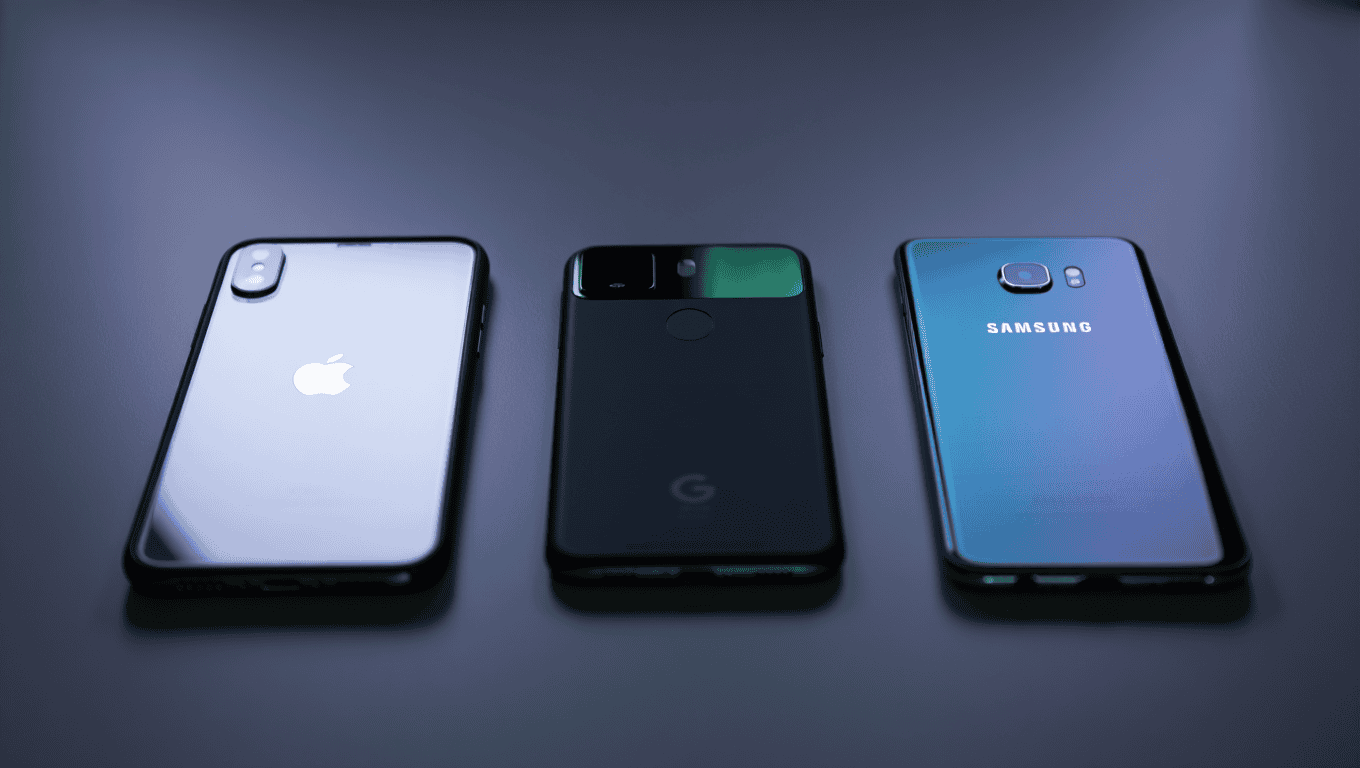
The smartphone landscape of 2026 has officially moved past the “megapixel wars.” While high resolutions remain, the true battleground has shifted to AI-native image pipelines, optical physics, and on-device generative editing. For consumers, the challenge is no longer finding a “good” camera—all flagships are excellent—but finding the specific imaging philosophy that aligns with their creative needs.
Whether you are a professional videographer requiring “Genlock” synchronization or a casual user wanting a “Magic Editor” to fix a ruined family photo, the choice between Apple, Samsung, and Google has never been more distinct.
1. The Heavyweights: 2026 Camera Specifications
To understand the performance, we must first look at the hardware driving these systems. In 2026, we see a convergence toward 48MP+ sensors across all lenses, though Samsung continues to push the envelope with extreme resolution.
| Feature | iPhone 17 Pro Max | Samsung Galaxy S26 Ultra | Google Pixel 10 Pro |
| Main Sensor | 48MP (1/1.14″ Stacked) | 200MP (ISOCELL HP6) | 50MP (GN5 Next-Gen) |
| Ultra-Wide | 48MP (f/2.2) | 50MP (f/2.0) | 48MP (f/1.7) |
| Telephoto | 48MP (4x Tetraprism) | 50MP (5x) + 10MP (3x) | 48MP (5x Periscope) |
| Max Video | 4K @ 120fps (ProRes) | 8K @ 30fps / 4K @ 120 | 8K (via Video Boost) |
| Key AI Tech | Apple Intelligence 2.0 | Galaxy AI (Real-time Gen) | Gemini Nano (Tensor G5) |
2. Apple iPhone 17 Pro Max: The Cinematographer’s Tool
Apple’s strategy for 2026 focuses on reliability and professional workflow. While others chase AI-generated “fixes,” Apple is doubling down on “truth in capture.”
Professional Video Evolution
The standout feature of the iPhone 17 Pro Max is Genlock support and Apple Log 2. For creators using multi-camera setups, Genlock allows the iPhone to sync its frame-timing perfectly with professional cinema cameras. Combined with the move to 48MP sensors across all rear lenses, the iPhone provides a seamless transition when switching between Wide, Ultra-Wide, and Telephoto during a 4K 120fps recording.
The “Natural” Aesthetic
Apple’s Image Signal Processor (ISP) on the A19 Pro chip continues to prioritize natural skin tones and a highlight-retention strategy that mimics film. It avoids the aggressive HDR “flatness” often seen in competitors, making it the preferred choice for those who plan to grade their footage or photos in post-production.
3. Samsung Galaxy S26 Ultra: The King of Versatility
Samsung continues to be the “Swiss Army Knife” of mobile photography. If you need to shoot a subject a mile away or capture a 200MP landscape with enough detail for a billboard, the S26 Ultra is the only choice.
Zoom Dominance and AI Clarity
The S26 Ultra utilizes a refined Dual-Telephoto system. While the 100x Space Zoom is still a marketing staple, the real improvement lies in AI-Enhanced Zoom. In 2026, Samsung’s “ProVisual Engine” uses generative AI to “fill in” textures on distant subjects (like text on a sign or feathers on a bird), making 30x shots look indistinguishable from 5x optical shots.
Nightography 2.0
With a massive f/1.4 equivalent aperture through pixel binning, the S26 Ultra excels in extreme low light. It captures light in scenarios where the human eye sees only shadows, though it still tends to “over-brighten” scenes, sometimes sacrificing the mood of a night shot for sheer visibility.
4. Google Pixel 10 Pro: The AI Mastermind
The Pixel 10 Pro represents Google’s most significant hardware leap, finally moving to the TSMC-manufactured Tensor G5 chip. This allows for “AI-native” photography that happens instantly, rather than waiting for cloud processing.
Computational Superiority
Google’s HDR+ pipeline remains the industry gold standard for difficult lighting (e.g., a person standing in front of a bright sunset). The Pixel 10 Pro introduces Pro Res Zoom, which leverages the new Tensor chip to perform multi-frame synthesis at a sub-pixel level, rivaling Samsung’s dedicated zoom hardware through pure math.
Generative Reality
The Pixel’s “Add Me” and “Magic Editor” features have evolved into Real-time Scene Reimagining. You can now change the lighting of a photo after it’s taken, not just adding a filter, but re-calculating how light would physically bounce off surfaces in the frame.
5. Space Management
In 2026, storage management is the “hidden” boss battle of mobile cinematography. As resolutions and color depths have peaked, the sheer volume of data produced by these sensors has reached a breaking point for internal storage.
Here is the technical breakdown of video bitrates and storage demands for the 2026 flagship lineup.
2026 Video Bitrate & Storage Comparison
| Format | iPhone 17 Pro Max | Samsung S26 Ultra | Google Pixel 10 Pro |
| 8K @ 30fps | ~900 Mbps (ProRes) | ~120 Mbps (HEVC) | ~100 Mbps (HEVC/AV1) |
| 4K @ 120fps | ~1,200 Mbps (ProRes) | ~200 Mbps (HEVC) | N/A (Max 4K 60fps) |
| 4K @ 60fps | ~600 Mbps (ProRes) | ~80 Mbps (HEVC) | ~75 Mbps (HEVC) |
| Storage per Min (8K) | ~7.5 GB | ~0.9 GB | ~0.75 GB |
| Required Speed | 440 MB/s (Ext. SSD) | UFS 4.0 Internal | Internal / Cloud Sync |
1. iPhone 17 Pro Max: The “Storage Eater
Apple continues to prioritize image fidelity over file size. With the introduction of ProRes RAW in 2026, the iPhone has officially become a device that requires external hardware for serious shooting.
ProRes RAW internal cap: Due to thermal and storage constraints, the iPhone 17 Pro Max typically caps internal 8K recording to short bursts.
The USB-C 4.0 Requirement: To record 4K @ 120fps in ProRes, you must use an external SSD with at least 440 MB/s sustained write speeds.
Log 2 Encoding: Apple’s new Log 2 profile preserves 15+ stops of dynamic range, but the files are roughly 30x larger than standard HEVC files.
2. Samsung Galaxy S26 Ultra: Efficiency King
Samsung uses highly optimized HEVC (H.265) and AV1 encoding to keep 8K files manageable for the average user.
Internal 8K Stability: Unlike the iPhone, the S26 Ultra can record 8K @ 30fps directly to its internal UFS 4.0 storage for extended periods (up to 30 mins) before thermal throttling kicks in.
10-bit HDR10+: Samsung’s 8K footage is vibrant and ready for social media immediately, unlike Apple’s “flat” Log footage which requires color grading.
3. Google Pixel 10 Pro: The Hybrid Approach
Google relies on the Tensor G5’s new ISP and a “split-processing” model.
On-Device vs. Cloud: The Pixel 10 Pro records a high-quality “base” video locally. If you enable Video Boost 2.0, it uploads metadata to Google’s servers to reconstruct an 8K file with superior noise reduction that the phone’s hardware couldn’t handle alone.
AV1 Encoding: Google is the leader in AV1 adoption, providing the same visual quality as Samsung but with 20% smaller file sizes, making it the best for users with limited data plans or cloud storage.
iPhone vs. Pixel vs. Samsung Comparison: Which is Right for Me?
Best for Social Media Creators: iPhone 17 Pro Max
If your workflow involves Instagram, TikTok, or YouTube, the iPhone remains undefeated. Its third-party app integration ensures that the camera quality you see in the “Camera” app is what you get inside social apps, a hurdle Android still struggles to clear consistently.
Best for Travel and Nature: Samsung Galaxy S26 Ultra
The combination of a 200MP main sensor for landscapes and the best-in-class zoom for wildlife makes this the ultimate travel companion. The S-Pen also serves as a handy remote shutter for group long-exposure shots.
Best for “Point and Shoot” Simplicity: Google Pixel 10 Pro
If you want to pull a phone out of your pocket, press a button, and get a perfect shot 100% of the time without touching a single setting, the Pixel is your winner. Its ability to freeze motion (Face Unblur) makes it the best for parents and pet owners.
Frequently Asked Questions (FAQs)
Which phone has the best camera in 2026?
There is no single winner. The iPhone 17 Pro Max is best for video, the Samsung Galaxy S26 Ultra is best for zoom and resolution, and the Google Pixel 10 Pro is best for still photography and AI features.
Is the 200MP camera on the Samsung S26 Ultra worth it?
Yes, for users who do a lot of cropping. The 200MP sensor allows you to “digital zoom” into a photo after it’s taken while maintaining enough detail for social media or small prints.
Does the Pixel 10 Pro take better night photos than the iPhone?
Generally, yes. Google’s Night Sight handles complex light sources (like streetlamps) with fewer lens flares and better shadow detail than the iPhone, though the iPhone is catching up with its new anti-reflective lens coatings.
Can the iPhone 17 Pro Max record 8K video?
The iPhone 17 Pro Max is expected to support 8K video recording, but as of now, it does not currently offer this feature. While the hardware supports it, Apple iPhone 16 series has traditionally capped resolution at 4K to prioritize high frame rates (120fps) and ProRes stability. SamsungS25 and Google remain the leaders for 8K recording.
What is “AI-native” photography?
It refers to cameras where the AI isn’t just a “filter” applied after the photo is taken but is integrated into the sensor readout. This allows for features like real-time object removal or instant HDR processing without “shutter lag.”
Which phone is best for selfies?
The iPhone 17 Pro Max currently leads with its new 24MP front-facing system, offering superior autofocus and “Center Stage” tracking for video calls.
Summary and Final Verdict
In 2026, your choice of smartphone camera is a choice of workflow.
- Choose Apple if you value video consistency and professional ecosystem integration.
- Choose Samsung if you want the most powerful hardware and the ability to shoot any subject at any distance.
- Choose Google if you want the smartest software and the most “pleasing” still photos with zero effort.
The gap between these three has narrowed significantly in terms of raw quality, but their “personalities” have never been more distinct.
